

We are Prosegur
Prosegur Security
Prosegur Security



Prosegur Security strengthens its position in a $50 billion industry
Prosegur Security has consolidated its presence in the world's most competitive market. We spoke with Fernando Abós, its CEO, about the hybrid security model that is driving its double-digit growth in the United States.
'The US is already our most profitable market'.
Fernando Abós
CEO Prosegur Security
The United States has become a strategic market for Prosegur Security. In just a few years, the company has gone from having a token presence to establishing itself as one of the leading private security operators in the country. “The United States is now our second largest market in terms of sales and the largest in terms of profitability and growth,” confirms Fernando Abós, CEO of Prosegur Security, who leads the group's international expansion from Miami.
The segment that includes surveillance and technology alone—the same one in which the company operates—is worth around $50 billion and is growing above inflation. “It is a large market with a lot of potential and, above all, attractive to investors,” explains Abós. "The reality is that we are seeing strong interest from private equity firms, with significant M&A activity in the sector. This clearly reflects the appeal and confidence that the market has in private security as an industry with a future."
Fernando Abós, CEO of Prosegur Security
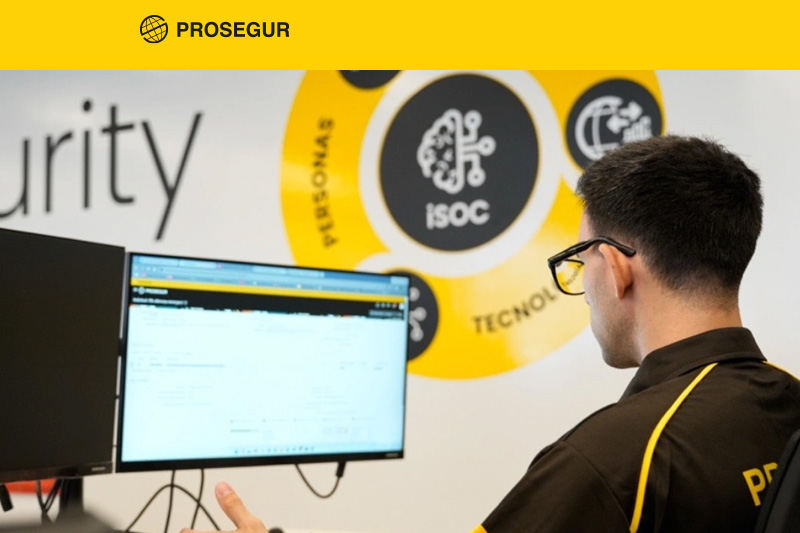
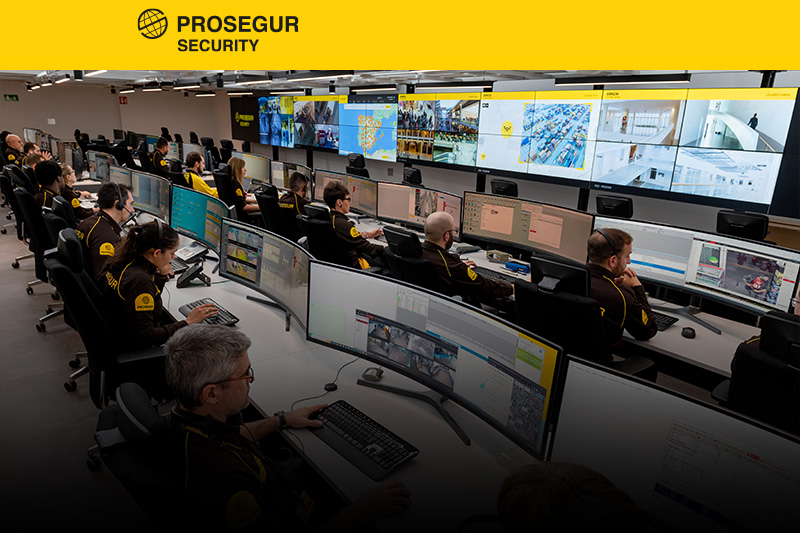
The executive acknowledges that growth has been “extraordinary,” the result of a firm commitment to technological integration and an operating model that redefines the role of the security guard. Under this premise, Prosegur Security has consolidated a Hybrid Security model that integrates people, technology, and data, with the iSOC (intelligent operations center) at the core of the system.
Prosegur Security currently operates in 40 offices across the United States and is experiencing double-digit growth in the country, with more than 6,000 employees.
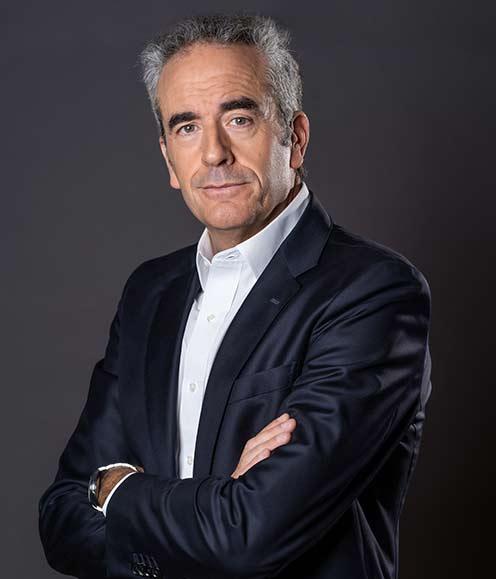
'The American market rewards those who do things well. It is an extremely competitive environment, but also very transparent and meritocratic. No one asks you where you come from, but what you do and how you do it.'
People, technology, and data: the pillars of the hybrid model
No industry can escape the rise of artificial intelligence and data technology. Not even private security, a sector traditionally anchored in physical presence and direct supervision. As the market moves towards automation, Prosegur Security has opted for a more balanced model, where technology enhances—but does not replace—human labor. “The connected security guard is the future of private security. Technology does not replace the human factor, it enhances it,” says Abós.
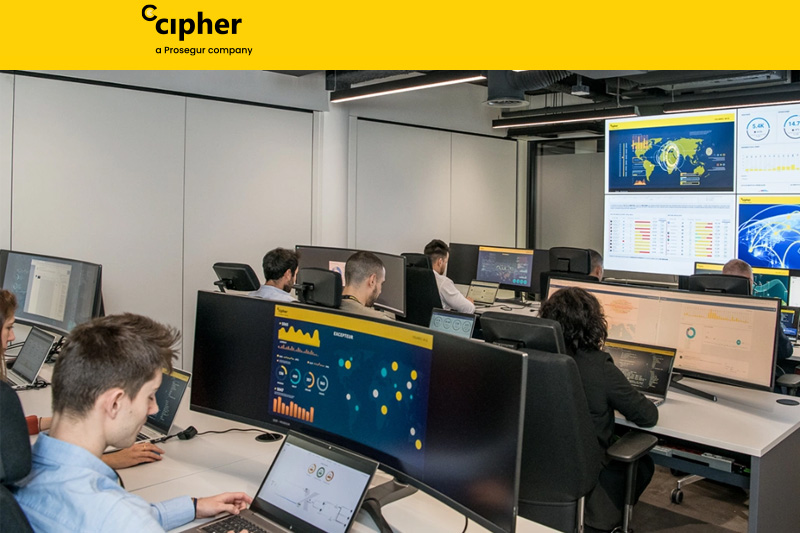
The result is an operating model where technology expands the scope of on-site surveillance and multiplies its effectiveness. Systems connected to the iSOC and solutions based on artificial intelligence and computer vision process information in real time, allowing risks to be anticipated and the margin of error to be reduced. “We have the ability to anticipate incidents, not just react to them. That's the big difference from traditional security.”
The CEO insists that the key is integration: “When a retail company or a large infrastructure trusts us, it doesn't want to hire a security systems provider or a security guard company. It wants a partner that guarantees operational continuity and comprehensive protection. And that can only be achieved by bringing people, technology, and data together under the same logic.”
'We are implementing predictive analytics systems that enable us to detect anomalous behavior patterns before an incident occurs. Artificial intelligence and machine learning are already part of our operations.'
POPS: a “hyper-customizable” platform created by and for security

POPS is Prosegur Security's big technological bet in the United States, a proprietary platform that brings together the group's hybrid security strategy. Unlike other large companies in the sector, which use third-party technological solutions, Prosegur has opted for a platform designed specifically for the security sector. “The platform is ours. And what's more, it's hyper-customizable,” emphasizes the CEO.
“If a customer has, for example, 5,000 stores in the United States with a specific pattern of theft, we can configure the tool to monitor the indicators and KPIs relevant to their business, and to ensure that the service is aligned with their specific operations,” explains Abós. In addition, the executive highlights that the value of the data goes far beyond operational monitoring. "All the information generated on a daily basis feeds into our hybrid model and allows us to adjust the operating model based on actual risk: reinforcing resources where incidents increase and reassigning them to more controlled areas. It is a process of continuous improvement that makes the system increasingly intelligent and efficient.
'We talk a lot about people, technology, and data, but POPS allows us to put it into practice in the field.'
A market that demands excellence
Expansion in the United States has pushed Prosegur Security to raise its quality and compliance standards even further. With an extremely strict regulatory framework and fierce competition—the industry includes between 2,000 and 3,000 companies across the country—survival depends on agility and responsiveness.
“Entering the United States means understanding a very demanding business culture, where clients expect measurable results from day one,” the executive notes. The company has invested in state licensing, certifications, and training programs for its local workforce.
The outcome has been a more agile structure and more efficient operations. “We’ve managed to bring our successful model from Europe and Latin America, adapted to the pace and rules of the American market,” Abós adds.
A significant part of growth comes from sector diversification. Prosegur Security has positioned itself in areas such as logistics, retail, and data centers, developing tailored proposals. “There is no one-size-fits-all security model,” he says. “Each industry has its own specifics. The added value lies in personalizing while maintaining the highest performance levels.”
Service culture as a competitive advantage

Technology alone is not everything. The CEO underscores that the real driver of growth has been the company’s culture of trust and service. “Our priority is always the customer experience. It’s a value we share in every market where we operate. The relationship doesn’t end when you install a system or deploy a security team—it starts there.”
That culture is also reflected in how the profession itself is understood. “Our model focuses on elevating the role, equipping professionals with tools that expand their capabilities and connect them with technology,” he notes. The result is a more prepared and decisive officer, able to make informed decisions and extend the reach of the service.
In the United States, where security plays a strategic role, the market recognizes and values this differentiated approach. “When you do things well and deliver a quality service, the market responds. Security is taken seriously here, and there is genuine recognition for companies that add value,” he concludes.
Toward a smarter, more human security
For Abós, the challenge in the coming years will be consolidating a model where AI and predictive analytics coexist with human judgment. “Technology helps us be more efficient, but trust still depends on people. That balance between digital intelligence and human intelligence defines our vision of the security of the future.”
Growth in the United States is far from slowing down. The company plans to continue expanding into new cities and sectors, leveraging its technological capability and reputation for reliability. “We’re in New York, Los Angeles, San Francisco, Miami, Houston… Our goal is to surpass 100 cities over the coming years,” the CEO concludes.
%201.webp)







.jpg)


%20webp.jpg)

.webp%20al.jpg)